Здраве и общество
76 въпроса с отговори, 10 ключови понятия и 6 задачи за мислене и 19 игри за проектора.

- 1 Тема: Здраве и общество
- 2 Изберете игра
- 3 Пуснете на проектора
Здраве и общество
Табло и Вярно или невярно са безплатни с профил. Всички игри и „На живо“: 30 дни безплатно за учители. Цени
На живо с телефониУчениците влизат с код и отговарят от телефона си. Класация в реално време.Без проектор и без телефони
Отбелязвате от своя компютър, а всеки отговор отива в профила на ученика.Отборни битки
Класът е разделен на отбори, които се състезават за точки.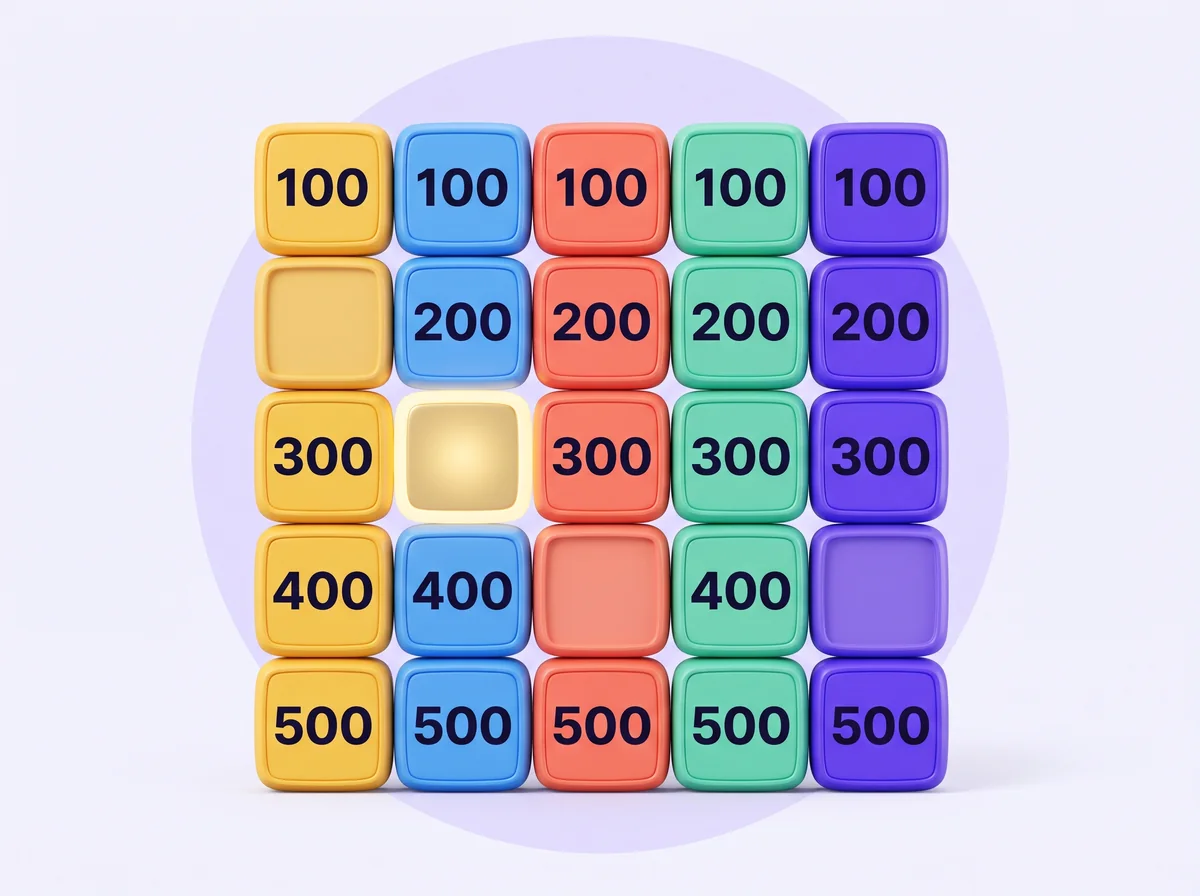 Табло5 теми по 5 въпроса, от 100 до 500 точки. Отборите избират поле, едно поле крие двойна стойност.Безплатно
 Отборен тест А/Б/В/ГВъпрос с четири отговора и таймер. Всеки отбор вдига карта с буква.Пусни на проектора
 НадбягванеВсеки отбор има писта. Верният отговор движи колата напред, трудният въпрос дава турбо.Пусни на проектора
 Теглене на въжеДва отбора един срещу друг. Всеки верен отговор дърпа въжето към твоя отбор.Пусни на проектора
 Морски шахХ срещу О на поле 3 на 3. За да заемеш квадрат, трябва да отговориш на въпроса в него.Пусни на проектора
 БомбаБомбата с неизвестен фитил минава от отбор на отбор при верен отговор. Не я задържай!Пусни на проектора
 КолелотоЗавъртете колелото: то избира темата и наградата. Понякога носи бонус, понякога взима хода.Пусни на проектора
Целият клас
Всички играят заедно или един по един пред класа. Ескейп стаяПет заключени врати и часовник. Всяка решена врата дава цифра от кода за изход.Пусни на проектора
 Милионер15 въпроса с нарастваща трудност, три жокера и сигурни суми.Пусни на проектора
 Горещ столЕдин ученик, 60 секунди и колкото може повече верни отговори. Класът следи класацията.Пусни на проектора
 БингоРазпечатайте картите. Учителят чете въпросите, учениците зачеркват отговорите.Пусни на проектора
 Вярно или невярноБързи твърдения. Класът гласува с палец нагоре или надолу.Безплатно
Думи и понятия
Ключовите понятия от темата: познай, свържи, запомни. КръстословицаКръстословица от 10 ключови понятия. Решавате на екрана или я разпечатвате.Пусни на проектора
 БесеницаПознайте понятието буква по буква, преди да свършат опитите.Пусни на проектора
 Тайният обектТри подсказки от трудна към лесна. Колкото по-рано познаеш, толкова повече точки.Пусни на проектора
 МемориОбърнати карти с въпроси и отговори. Намерете двойките и запомнете къде са.Пусни на проектора
 Свържи двойкитеШест въпроса и шест отговора, разбъркани. Отборите ги свързват на ред.Пусни на проектора
Мислене
Подреждане и откриване на грешки: разбиране, не наизуст.

Уроци в темата
Кратко обяснение, най-важното за запомняне и въпроси за всеки урок от учебната програма.
Въпроси и отговори: Здраве и общество
Всички въпроси от комплекта по английски език за 10 клас. Натиснете въпроса, за да видите верния отговор и обяснението. Удобно за преговор преди контролно и за подготовка у дома.
Healthy living
Which food is a good source of protein?
- sweets
- eggs
- crisps
- fizzy drinks
Отговор: eggs
Яйцата съдържат много белтъчини (протеин).
Which drink is the healthiest choice?
- cola
- energy drink
- water
- milkshake
Отговор: water
Водата не съдържа захар и калории.
Which of these is junk food?
- apples
- crisps
- carrots
- beans
Отговор: crisps
Crisps (чипс) съдържат много сол и мазнини, затова са нездравословна храна.
Doctors say teenagers need about ___ hours of sleep a night.
- 4-5
- 6
- 8-10
- 12-14
Отговор: 8-10
Препоръката за тийнейджъри (13-18 години) е 8-10 часа сън.
Fruit and vegetables are rich in ___ and minerals.
- vitamins
- fats
- sugars
- salts
Отговор: vitamins
Плодовете и зеленчуците са богати на витамини и минерали.
Which organ pumps blood around the body?
- the lungs
- the liver
- the stomach
- the heart
Отговор: the heart
Сърцето (heart) изпомпва кръвта, а белите дробове (lungs) служат за дишане.
Which collocation is correct?
- make exercise
- play exercise
- go exercise
- do exercise
Отговор: do exercise
Казваме do exercise, а go се използва с -ing: go running.
Stress can be reduced by ___.
- skipping meals
- regular exercise and enough sleep
- staying up all night
- drinking more coffee
Отговор: regular exercise and enough sleep
Движението и достатъчният сън намаляват стреса.
Which phrasal verb means 'to start doing a new sport or hobby'?
- take up
- give up
- put off
- look after
Отговор: take up
Take up значи да започнеш ново занимание, например: I took up yoga.
A diet that contains the right amounts of all food groups is a ___ diet.
- balanced
- heavy
- strict
- junk
Отговор: balanced
Balanced diet: балансирано хранене.
Which phrasal verb means 'to stop doing a bad habit'?
- take up
- set up
- bring up
- give up
Отговор: give up
Give up smoking: отказвам; take up означава започвам.
If you are 'fit', you are ___.
- very tired
- seriously ill
- in good physical condition
- always hungry
Отговор: in good physical condition
Fit означава в добра физическа форма.
Someone who has a 'sedentary lifestyle' ___.
- eats only vegetables
- spends most of the day sitting
- travels a lot
- works night shifts
Отговор: spends most of the day sitting
Sedentary означава заседнал, с малко движение.
BMI, a measure of weight compared to height, stands for Body Mass ___.
- Index
- Indicator
- Increase
- Intake
Отговор: Index
BMI = Body Mass Index, индекс на телесната маса.
Which sentence is correct?
- You'd better not to eat so much sugar.
- You had better don't eat so much sugar.
- You'd better not eat so much sugar.
- You better not eating so much sugar.
Отговор: You'd better not eat so much sugar.
След had better следва основна форма без to, а отрицанието е had better not + глагол.
Conditionals 3 & mixed
If I had studied harder, I ___ the exam.
- would pass
- will pass
- would have passed
- passed
Отговор: would have passed
Трето условно: If + Past Perfect, would have + V3.
If it hadn't rained, we ___ to the beach.
- would go
- would have gone
- will go
- had gone
Отговор: would have gone
Резултат в миналото: would have + V3.
Which tense follows 'if' in the third conditional?
- past perfect
- present simple
- past simple
- future simple
Отговор: past perfect
Трети тип: If + past perfect, would have + причастие.
If she ___ the bus, she wouldn't have been late.
- didn't miss
- hadn't missed
- wouldn't miss
- doesn't miss
Отговор: hadn't missed
В подчиненото изречение на третото условно е Past Perfect.
If you had asked me, I ___ have helped you. (possibility)
- will
- must
- shall
- might
Отговор: might
Might have + V3 изразява възможен резултат в третото условно.
If we had left earlier, we ___ the train.
- didn't miss
- won't miss
- haven't missed
- wouldn't have missed
Отговор: wouldn't have missed
Нереално условие в миналото: would (not) have + минало причастие.
Which sentence is a mixed conditional (past condition, present result)?
- If I take the medicine, I will feel better.
- If I took the medicine, I would feel better.
- If I had taken the medicine, I would have felt better.
- If I had taken the medicine, I would feel better now.
Отговор: If I had taken the medicine, I would feel better now.
Минало условие (had taken) със сегашен резултат (would feel now).
She is a doctor now because she studied medicine. → If she hadn't studied medicine, she ___ a doctor now.
- wouldn't be
- won't be
- wouldn't have been
- isn't
Отговор: wouldn't be
Смесено условно: сегашен резултат с would + инфинитив.
What does this mean: 'If I had seen the sign, I would have stopped.'?
- I saw the sign and I stopped.
- I didn't see the sign and I didn't stop.
- I saw the sign but I didn't stop.
- I will stop if I see the sign.
Отговор: I didn't see the sign and I didn't stop.
Третият тип описва обратното на реалността: не е видял знака и не е спрял.
I didn't eat breakfast, so I'm hungry now. → If I ___ breakfast, I wouldn't be hungry now.
- ate
- had eaten
- would eat
- have eaten
Отговор: had eaten
Минало условие: Past Perfect; сегашен резултат: would + инфинитив.
Find the correct ending: 'If I had known you were in hospital, ...'
- I will visit you.
- I visited you.
- I would have visited you.
- I would visit you yesterday.
Отговор: I would have visited you.
Третото условно изисква would have + V3.
Which sentence has the same meaning as 'If you hadn't helped me, I would have failed.'?
- With your help, I would have failed.
- Without your help, I would fail.
- Thanks to you, I failed.
- Without your help, I would have failed.
Отговор: Without your help, I would have failed.
Without + съществително може да замени if-изречението: without your help = if you hadn't helped me.
Choose the correct sentence.
- If he was more careful, he won't break his leg.
- If he had been careful, he will not break his leg.
- If he were more careful, he wouldn't have broken his leg yesterday.
- If he would be careful, he wouldn't have broken his leg.
Отговор: If he were more careful, he wouldn't have broken his leg yesterday.
Смесено условно: сегашна черта (were careful) и минал резултат (wouldn't have broken).
Which sentence means: 'He is not tall, so he wasn't chosen for the team'?
- If he had been chosen, he would be taller.
- If he is taller, he will be chosen.
- If he was chosen, he would be taller.
- If he were taller, he would have been chosen for the team.
Отговор: If he were taller, he would have been chosen for the team.
Сегашна черта (were taller) и минал резултат (would have been chosen).
Choose the correct formal form of 'If I had known the truth, I would have told you.'
- Did I know the truth, I would have told you.
- Had I known the truth, I would have told you.
- Have I known the truth, I would have told you.
- Would I have known the truth, I would have told you.
Отговор: Had I known the truth, I would have told you.
При инверсия изпускаме if и слагаме had пред подлога: Had I known...
wish / if only
I don't have a dog. I wish I ___ a dog.
- have
- had
- will have
- am having
Отговор: had
Желание за настоящето: wish + Past Simple.
I'm not tall. I wish I ___ taller.
- am
- were
- will be
- be
Отговор: were
Wish + were (в разговорна реч и was).
Which phrase has a similar meaning to 'I wish'?
- Unless
- Even if
- If only
- As if
Отговор: If only
If only изразява същото желание като I wish, но по-силно и емоционално.
I'm so tired. I wish I ___ to bed earlier last night.
- went
- go
- had gone
- would go
Отговор: had gone
Съжаление за миналото: wish + Past Perfect.
Which sentence expresses regret about the past?
- I wish I listen to my parents.
- I wish I will listen to my parents.
- I wish I had listened to my parents.
- I wish I am listening to my parents.
Отговор: I wish I had listened to my parents.
Съжаление за миналото: wish + Past Perfect.
Which sentence is more common in formal English?
- I wish I were richer.
- I wish I am richer.
- I wish I will be richer.
- I wish I be richer.
Отговор: I wish I were richer.
След wish с be в официален стил използваме were за всички лица; was е разговорно.
The neighbours are so noisy. I wish they ___ making so much noise.
- will stop
- would stop
- had stopped
- stop
Отговор: would stop
Wish + would изразява раздразнение от чуждо поведение.
It's raining again. I wish it ___ raining!
- has stopped
- stops
- will stop
- would stop
Отговор: would stop
Wish + would: желание за промяна, която не зависи от нас.
I wish you wouldn't ___ my things without asking!
- took
- take
- taken
- to take
Отговор: take
Wish + would/wouldn't + основна форма изразява раздразнение от чуждо поведение.
If only I ___ so rude to my friend yesterday!
- wasn't
- wouldn't be
- haven't been
- hadn't been
Отговор: hadn't been
If only + Past Perfect: силно съжаление за минало действие.
'I wish I had a car' means:
- I have a car.
- I don't have a car and I'd like one.
- I had a car in the past.
- I will buy a car soon.
Отговор: I don't have a car and I'd like one.
Wish + Past Simple: сегашната ситуация е различна от желаната.
Which sentence is NOT correct?
- I wish I were taller.
- I wish I could fly.
- I wish I had more time.
- I wish I would be taller.
Отговор: I wish I would be taller.
Не използваме wish + would, когато подлогът в двете части е един и същ (I wish I would...).
Which sentence is correct?
- I wish I could speak Chinese.
- I wish I can speak Chinese.
- I wish I would speak Chinese.
- I wish I will speak Chinese.
Отговор: I wish I could speak Chinese.
След wish can става could; wish I would за себе си не се използва.
If only I ___ the answer now! I can't remember it.
- knew
- know
- had known
- would know
Отговор: knew
Сегашно желание: if only + Past Simple.
I'd rather you ___ smoke in the house.
- didn't
- don't
- won't
- not
Отговор: didn't
След I'd rather + друго лице използваме минало време за настоящето: I'd rather you didn't.
Global issues
The rise in the Earth's average temperature is called global ___.
- cooling
- weather
- warming
- heating
Отговор: warming
Global warming: глобално затопляне.
Dirty air, water or land is the result of ___.
- pollution
- education
- tourism
- volunteering
Отговор: pollution
Pollution: замърсяване.
Not having enough money for basic needs is called ___.
- wealth
- luxury
- poverty
- profit
Отговор: poverty
Poverty означава бедност.
People who have to leave their country because of war are ___.
- refugees
- tourists
- volunteers
- commuters
Отговор: refugees
Refugees: бежанци.
Animals that may soon disappear forever are ___ species.
- dangerous
- endangered
- extinct
- wild
Отговор: endangered
Endangered са застрашени видове; extinct вече са изчезнали.
Which of these is a natural disaster?
- a festival
- an election
- an earthquake
- a concert
Отговор: an earthquake
Earthquake (земетресение) е природно бедствие.
Cutting down large areas of forest is called ___.
- pollution
- recycling
- drought
- deforestation
Отговор: deforestation
Deforestation: изсичане на горите.
Energy from the sun and the wind is ___ energy.
- nuclear
- fossil
- renewable
- limited
Отговор: renewable
Възобновяема енергия: слънце, вятър, вода.
A serious lack of clean drinking water is called water ___.
- scarcity
- pollution
- flooding
- cycle
Отговор: scarcity
Scarcity означава недостиг. Water pollution е замърсяване, а не липса на вода.
A long period with little or no rain is a ___.
- flood
- drought
- hurricane
- famine
Отговор: drought
Drought е суша; famine е глад.
Gases such as carbon dioxide that trap heat in the atmosphere are called ___ gases.
- noble
- natural
- toxic
- greenhouse
Отговор: greenhouse
Парниковите газове задържат топлината около Земята.
People who move to another place or country to live or work are ___.
- natives
- locals
- residents
- migrants
Отговор: migrants
Migrants са хора, които се преместват да живеят или работят другаде.
The 17 global goals of the United Nations for 2030 are called the ___.
- Sustainable Development Goals
- Millennium Targets
- Green Rules
- Kyoto Goals
Отговор: Sustainable Development Goals
Целите за устойчиво развитие (SDGs) са приети от ООН през 2015 г.
The gap between rich and poor people in a society is called ___.
- inequality
- unemployment
- inflation
- the poverty line
Отговор: inequality
Inequality: неравенство.
The 2015 international deal to limit global warming to well below 2°C is the Paris ___.
- Convention
- Agreement
- Declaration
- Charter
Отговор: Agreement
Парижкото споразумение (Paris Agreement) е прието през 2015 г. на климатичната конференция в Париж.
Volunteering
A person who works without pay to help others is a ___.
- manager
- volunteer
- customer
- boss
Отговор: volunteer
Volunteer: доброволец.
Picking up rubbish in a park with other volunteers is a ___.
- check-in
- take-off
- clean-up
- break-in
Отговор: clean-up
Clean-up: почистване.
A place that gives free food to people in need is a food ___.
- shop
- market
- factory
- bank
Отговор: bank
Food bank (хранителна банка) раздава безплатна храна на нуждаещи се.
Money and things given to help people in need are ___.
- donations
- taxes
- fines
- wages
Отговор: donations
Donations: дарения.
A shop that sells donated second-hand things to raise money is a ___ shop.
- charity
- gift
- duty-free
- corner
Отговор: charity
Charity shop продава дарени вещи в полза на кауза.
I'm free today. Can I ___ with the cleaning?
- give up
- help out
- put off
- run out
Отговор: help out
Help out означава да помогнеш с нещо.
Our class organised a charity concert to ___ money for the hospital.
- rise
- grow
- lift
- raise
Отговор: raise
Raise money: събирам пари за кауза; rise е непреходен глагол.
Volunteering helps young people ___ new skills.
- make
- develop
- do
- win
Отговор: develop
Develop skills: развивам умения.
A person who gives blood to help ill people is a blood ___.
- doctor
- dealer
- donor
- driver
Отговор: donor
Donor е дарител, например на кръв.
A non-profit organisation that helps people in need is a ___.
- company
- bank
- charity
- factory
Отговор: charity
Charity: благотворителна организация.
Someone who looks after an elderly or ill person at home is a ___.
- career
- cashier
- courier
- carer
Отговор: carer
Carer е човек, който се грижи за болен или възрастен (не career).
Many students volunteer abroad during a ___ year between school and university.
- gap
- leap
- free
- half
Отговор: gap
Gap year е година почивка между училище и университет, често за пътуване или доброволчество.
Last summer I ___ for a beach clean-up.
- signed up
- gave up
- looked up
- put off
Отговор: signed up
Sign up for: записвам се за нещо.
Which sentence is grammatically correct?
- I'm interested to volunteering at the hospital.
- I'm interested in volunteering at the hospital.
- I'm interesting in volunteer at the hospital.
- I'm interested on volunteering at the hospital.
Отговор: I'm interested in volunteering at the hospital.
Interested in + -ing; interesting описва нещо, а не чувство.
Choose the correct sentence.
- It's worth to volunteer because you meet great people.
- It's worth volunteering because you meet great people.
- It's worth volunteer because you meet great people.
- It's worthy volunteering because you meet great people.
Отговор: It's worth volunteering because you meet great people.
След it's worth използваме -ing форма.
Финален въпрос
Combine into one third conditional sentence: "He didn't wear a helmet. He got hurt."
Отговор: If he had worn a helmet, he wouldn't have got hurt.
Трето условно: If + Past Perfect, would have + V3, обратно на реалните събития (в американски английски: gotten).
Ключови понятия по темата
- Protein
- Хранително вещество в месото, яйцата и бобовите храни
- Vitamin
- Вещество в плодовете и зеленчуците, нужно за здравето
- Exercise
- Физическа активност за здраве и форма
- Regret
- Чувството, когато искаш да не беше направил нещо
- Pollution
- Замърсяването на въздуха, водата или почвата
- Refugee
- Човек, принуден да напусне страната си заради война
- Drought
- Дълъг период без дъжд
- Volunteer
- Човек, който помага, без да получава заплащане
- Charity
- Организация, която събира пари за хора в нужда
- Donation
- Пари или вещи, дадени безвъзмездно за кауза
Често задавани въпроси
Как да проведа час по темата „Здраве и общество“ с игра?
Изберете игра от комплекта и я пуснете на проектора или интерактивната дъска. Табло е добро за преговор на целия раздел, Ескейп стая е подходяща преди контролно, а Вярно или невярно е бърза загрявка в началото на часа. Не е нужно нищо за инсталиране.
По учебната програма ли са въпросите за 10 клас?
Да. Въпросите следват учебната програма на МОН по английски език за 10 клас (първи гимназиален етап) и покриват: Healthy living, Conditionals 3 & mixed, wish / if only, Global issues, Volunteering.
Могат ли учениците да отговарят от телефоните си?
Да. С режим „На живо“ всеки ученик влиза с код от телефона си, отговаря на въпросите и вижда класацията в реално време.
Може ли детето да упражнява темата у дома?
Да. В раздел „У дома“ детето играе със същите въпроси, събира звезди и повтаря грешките си, а родителят вижда напредъка.